
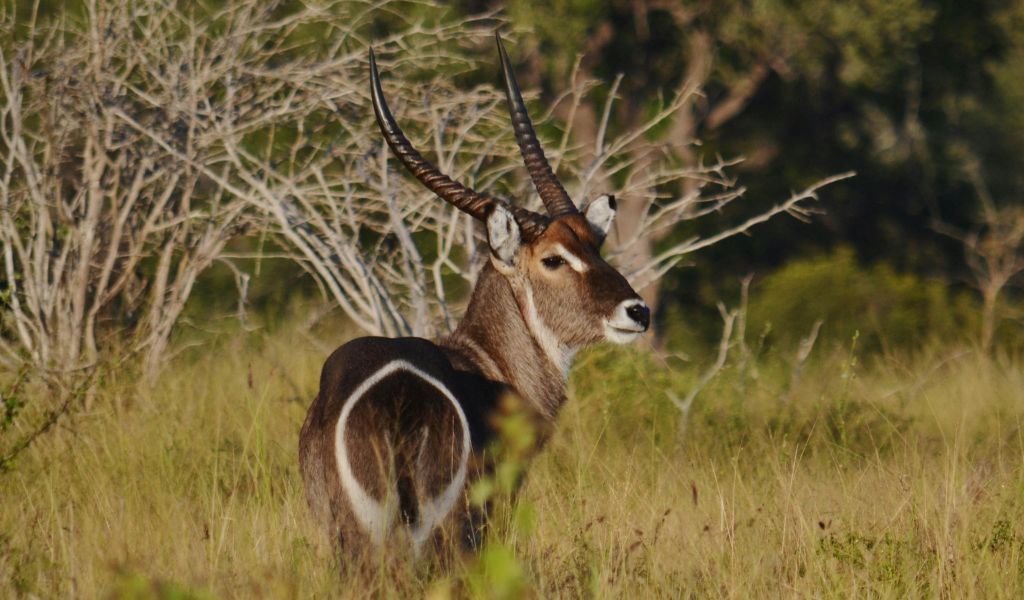
The waterbuck (Kobus ellipsiprymnus) is a large, impressive antelope species known for its robust build, long spiraling horns, and the iconic white ring on its rump. Native to southern and eastern Africa, the waterbuck is a challenging and rewarding plains game animal to pursue, particularly for hunters who appreciate thick-bodied, wary animals that test both shooting and stalking skills.
Namibia’s diverse terrain and abundance of healthy waterbuck populations make it one of the top destinations in Africa for waterbuck hunting. This guide offers an in-depth look at everything hunters need to know—from field behavior and preferred habitats to shot placement, caliber selection, trophy evaluation, and seasonality.
Waterbuck Size and Appearance
Waterbuck are among the largest antelope species in Africa, with mature bulls presenting an imposing presence in the field.
Shoulder Height: Bulls reach about 127 cm (50 inches), while cows average 119 cm (47 inches).
Weight: Mature males typically weigh between 198–262 kg (437–578 lbs); females are slightly lighter, ranging from 161–214 kg (355–472 lbs).
Horns: Only males have horns. These are long and spiraled, curving backward and upward, often measuring between 55–99 cm (22–39 inches). The horn length and symmetry are key indicators when judging trophy quality.
Coat: Waterbuck have a shaggy, grayish-brown coat and a white ring of hair on their rump—a distinctive trait that makes them easily identifiable in the bush.
Scent: They secrete a strong-smelling oil from their skin, which helps waterproof the coat but can taint the meat if not properly handled.
Habitat and Behavior
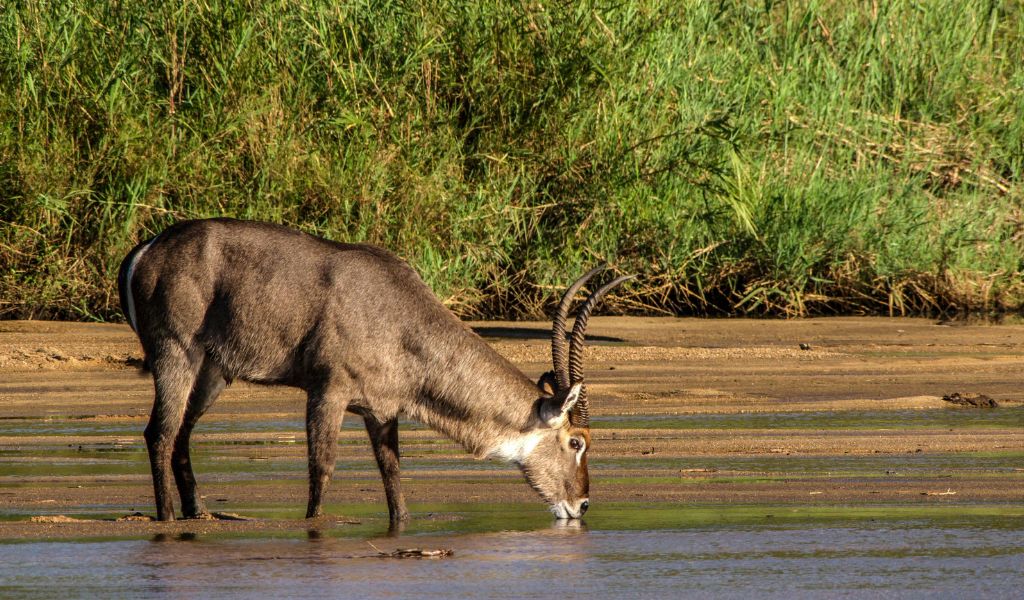
Waterbuck are highly water-dependent animals, which greatly influences where and how they live. In Namibia, they are commonly found near permanent water sources—rivers, lakes, or seasonal floodplains—particularly in the northeastern and central regions.
They prefer terrain with a combination of open grasslands for grazing and thick bush or reeds for cover. Their strong preference for areas close to water, along with their tendency to retreat into dense vegetation when threatened, can make locating and stalking them a real challenge.
Waterbuck are primarily grazers, feeding on grasses but will also browse during the dry season when grass is limited. Bulls are territorial and tend to be solitary or accompanied by small bachelor groups. Females and young often move in nursery herds.
Best Time of Year to Hunt Waterbuck
The ideal time to hunt waterbuck in Namibia is during the dry season, from July to October. During this period, water becomes scarce and the vegetation thins, making game easier to spot and track.
As waterbuck are dependent on drinking daily, they become more predictable in the dry season, regularly visiting known waterholes or riverbeds. This increases opportunities for ambush or blind-style hunts.
Best Time of Day to Hunt
Waterbuck are most active during the early mornings and late afternoons, when they graze and move between feeding areas and water. Midday is typically a resting period when they retreat into dense bush, making it less productive for active hunting.
For those looking to intercept waterbuck at water sources or ambush them during movement, targeting these twilight windows of activity provides the best chance of success.
Hunting Methods
Waterbuck are wary and strong, making them one of the more challenging plains game animals to hunt. Here are the most common methods used in Namibia:
1. Walk and Stalk
This is the most traditional and rewarding method. It involves glassing large open areas early in the morning, locating bulls, and then carefully stalking into shooting range using terrain and vegetation as cover. Waterbuck are alert and will often bolt into thick cover at the first sign of danger, so patience and stealth are critical.
2. Blind Hunting at Waterholes
During the dry season, waterbuck are highly reliable at returning to waterholes. Blinds set near these locations—either natural hides or raised platforms—allow for close-range shots. This method is especially effective for bowhunters or those who prefer a steady shooting platform.
3. Spot and Stalk from a Vehicle
In some cases, hunters use vehicles to glass large open areas and identify promising bulls before dismounting and proceeding on foot. This is especially effective on larger properties where game is more dispersed.
Recommended Caliber and Rifle Setup
Waterbuck are tough animals with thick hides and dense bone structure, especially in the shoulder area. A well-placed shot with a suitable caliber is essential for an ethical harvest.
Minimum Recommended Caliber: .270 Winchester (only for experienced marksmen and ideal conditions)
Ideal Calibers: .30-06 Springfield, 7mm Remington Magnum, .300 Winchester Magnum
Bullet Type: Use premium bonded bullets designed for deep penetration and controlled expansion (e.g., Nosler Partition, Swift A-Frame, Barnes TSX)
Shot Placement
Broadside (Preferred):
Aim just behind the front leg, about one-third up the body. This targets the heart and lungs for a quick, humane kill.
Quartering Away:
Aim through the opposite shoulder to ensure the bullet passes through the vitals.
Frontal:
Only for close-range shots. Aim at the base of the neck where it meets the chest.
Archery hunters should always aim for quartering-away shots to avoid bone and maximize penetration.
Trophy Judgement
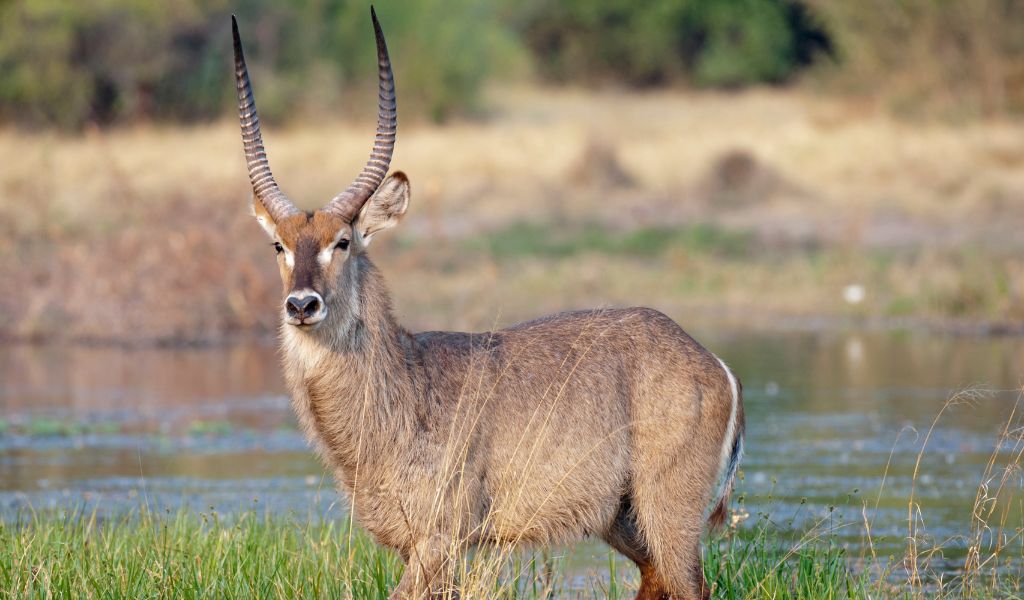
When evaluating a waterbuck bull, consider horn length, thickness at the base, and overall symmetry. Mature bulls will have horns that sweep gracefully backward and then upward, often well over 28–30 inches.
Safari Club International (SCI) Scoring:
Waterbuck are scored by measuring the length of each horn and the circumference at the bases. A mature trophy typically exceeds 70 inches total SCI score, though top-end bulls can score significantly higher.
Look for bulls with:
Heavily ringed, thick bases
Long, symmetrical horn tips
A dark, shaggy coat (older males)
Muscular body and confident posture
Trophy Fee and Costs
Hunting Waterbuck at Otjandaue Hunting Safaris in Namibia costs $2500.00 per trophy, excluding flights, daily rates, and rentals.
Final Thoughts
Waterbuck hunting in Namibia is a test of skill, patience, and precision. Their impressive size, striking appearance, and strong survival instincts make them one of Africa’s most rewarding plains game trophies. Whether you’re a first-time safari hunter or a seasoned sportsman, pursuing a mature waterbuck bull is an unforgettable experience.
With experienced guides, ideal habitat, and responsible outfitting, Namibia—and Otjandaue Hunting Safaris in particular—offers the perfect setting for your next waterbuck hunt.