
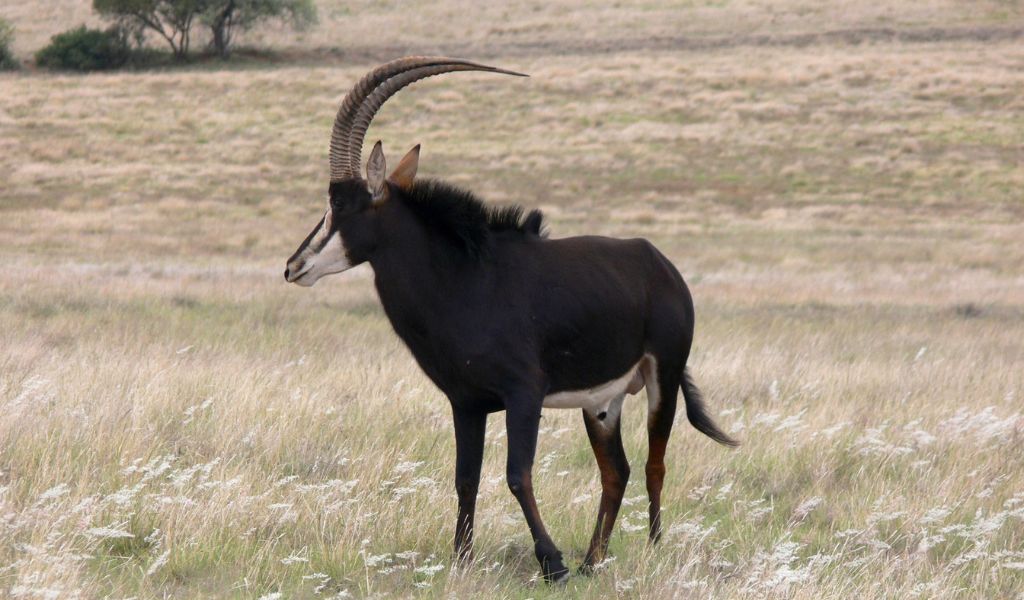
The sable antelope (Hippotragus niger) is one of Africa’s most magnificent and sought-after plains game trophies. Known for its striking appearance, impressive horns, and bold nature, the sable has become a top priority for hunters traveling to Namibia. Whether you are an experienced hunter or planning your first African safari, this comprehensive guide covers everything you need to know about hunting sable in Namibia, from anatomy and habitat to shot placement and trophy evaluation.
Sable Antelope Overview
- Scientific Name: Hippotragus niger
- Average Shoulder Height: 120–140 cm (47–55 inches)
- Weight: Bulls: 200–270 kg (440–595 lbs); Cows: 180–210 kg (395–460 lbs)
- Coloration: Mature bulls are jet black with white facial markings; females and young are reddish-brown
- Horns: Long, curved horns present in both sexes, but bulls’ horns are thicker and longer (up to 100 cm/39 inches or more)
The sable antelope is admired for its bold stance, curved horns, and beautiful coloration. Bulls are particularly impressive and are the primary target for trophy hunters.
Best Time to Hunt Sable in Namibia
Time of Year:
The ideal hunting season for sable in Namibia runs from May to September, during the dry winter months. The lack of rain results in shorter grasses and more predictable animal behavior around waterholes, making it easier to track and approach sable.
Best Time of Day:
- Early Morning: Sable are most active during the cooler hours just after sunrise. They tend to graze and move to water sources during this time.
- Late Afternoon: Activity often picks up again as temperatures begin to drop. Bulls may separate from herds and move toward waterholes or shaded grazing spots.
Avoid hunting during the midday heat, as sable typically rest in thick bush during this time.
Sable Habitat and Distribution in Namibia
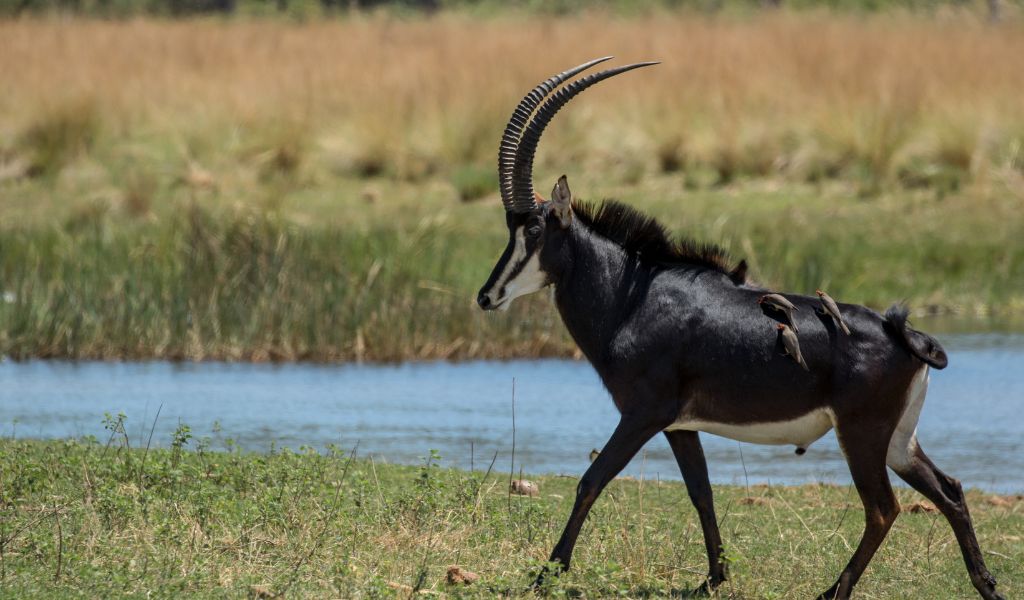
In Namibia, sable antelope are primarily found in the north-central and northeastern regions, particularly in private game ranches and conservancies. They favor:
- Light woodlands and savanna with tall grasses
- Areas close to water sources
- Dense cover during hot daylight hours
Because sable are grazers and water-dependent, they are often found in areas that combine open grazing land with some bush or tree cover.
Shot Placement
Ethical and effective shot placement is crucial when hunting sable due to their size and toughness.
Broadside Shot (Preferred):
- Aim one-third up from the bottom of the chest, directly behind the front leg. This targets the heart-lung area.
Quartering Away:
- Aim through the opposite shoulder, angling the shot to penetrate vital organs.
Avoid:
- Neck or headshots unless you’re at close range and highly confident. These areas are small targets and can result in wounding.
Recommended Caliber for Sable
Due to their robust build and thick hide, a medium-to-large caliber rifle is advised:
- Minimum: .270 Win, .308 Win
- Ideal: .30-06 Springfield, .300 Win Mag, 7mm Rem Mag
- Premium bullets with deep penetration (e.g., Nosler Partition, Swift A-Frame) are recommended.
Sable Hunting Methods
1. Walk and Stalk
The most traditional and rewarding method. Track sable on foot using spoor and sign, then approach quietly through bush or tall grass. Patience and skill are essential.
2. Blind Hunting at Waterholes
This is ideal during the dry season when sable visit waterholes regularly. Excellent for bowhunters or rifle hunters seeking a steady shooting rest.
3. Spot and Stalk from Vehicles
Useful on larger game farms. Drive slowly to locate animals, then plan a stalk on foot.
Male vs. Female: How to Tell the Difference
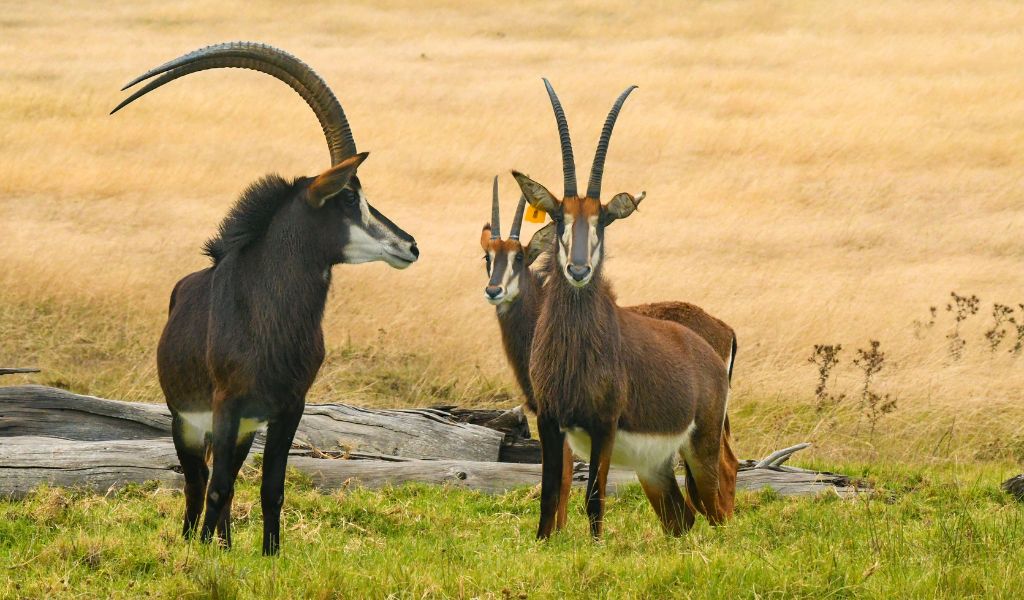
- Coloration: Mature bulls have a jet-black coat, while females and young have a reddish-brown or dark brown hue.
- Horns: Both sexes have horns, but bulls’ horns are longer (up to or exceeding 40 inches) and more heavily ridged. Cows’ horns tend to be shorter, thinner, and slightly less curved.
- Size and Build: Bulls are larger and more muscular, with a thicker neck and heavier body. Cows appear leaner and more agile.
Trophy Fee and Value
At Otjandaue Hunting Safaris, the sable antelope trophy fee is $5,000, excluding flights, daily rates, and rentals. This price reflects the rarity, size, and prestige of the animal.
Sable Trophy Judgement
Evaluating a sable bull in the field requires attention to horn size, symmetry, and age.
Key Traits of a Mature Trophy Bull:
- Horns curve well back over the shoulders and measure 40″+ in length
- Bases are thick and deeply ringed
- Bull has a dark, almost black coat with clear white facial markings
- Muscular neck and mature body frame
Safari Club International (SCI) Scoring: Safari Club International uses a standardized scoring system for sable trophies. The SCI score is calculated using the length of each horn and the circumference at the bases. To qualify as a trophy under SCI guidelines, a sable must achieve a minimum score of 96 points.
Field judging can be challenging, so trust your PH (professional hunter) for guidance and verification.
Final Thoughts
Sable hunting in Namibia is a true test of patience, skill, and precision. As one of the most prized plains game species, the sable delivers not only a visually stunning trophy but also an unforgettable hunting experience. With a combination of expert guides, ethical practices, and breathtaking terrain, Otjandaue Hunting Safaris provides the ideal setting to pursue this majestic antelope.
Book your 2025/2026 sable hunting safari now and experience the thrill of the African wild.