
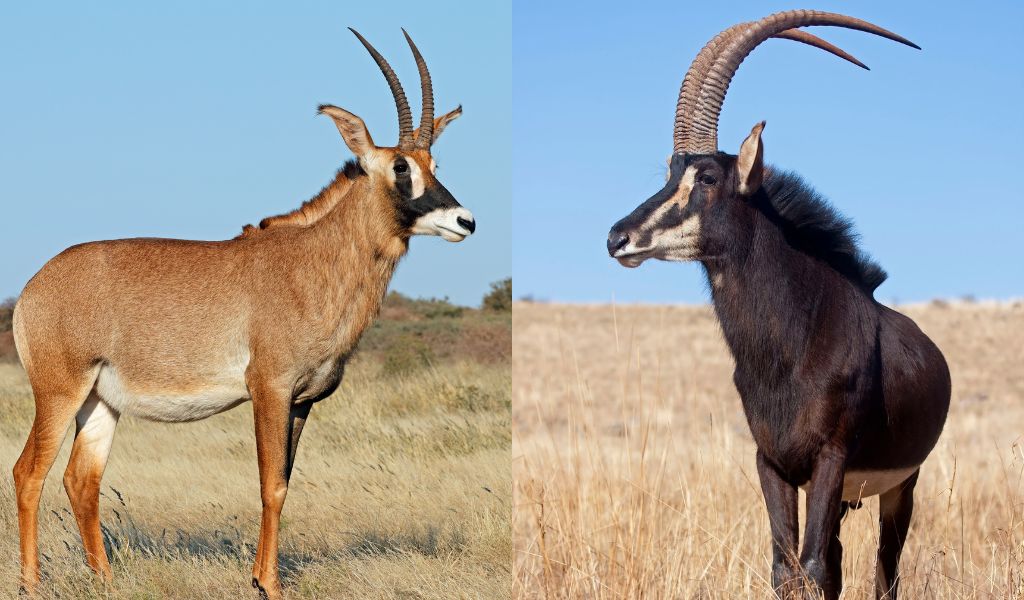
Among Africa’s most admired and prestigious plains game trophies, the roan antelope (Hippotragus equinus) and the sable antelope (Hippotragus niger) stand at the top. Both species are large, powerful, and visually striking, and both are carefully managed on select private ranches in Namibia.
Although they belong to the same genus and share similar body structures, roan and sable differ significantly in appearance, behavior, habitat preferences, hunting difficulty, and trophy characteristics. If you are considering either species for your Namibian safari, understanding these differences will help you make the right choice.
Physical Appearance and Identification
Roan Antelope
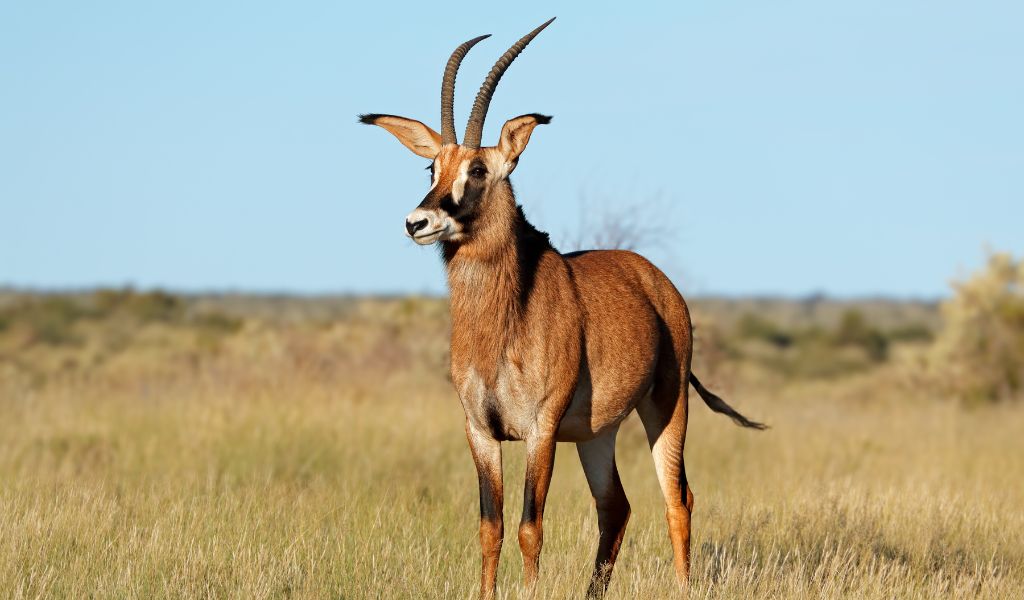
The roan antelope has a reddish to brown coat with a lighter underbelly. One of its most distinctive features is its bold black-and-white facial mask. Roan have long ears with dark fringes and a short upright mane.
Both bulls and cows carry horns. Mature bulls typically have thick bases with backward-curving horns that range between 60 and 100 cm. Their build is muscular and compact, giving them a powerful and solid appearance.
Roan bulls usually weigh between 230 and 300 kg, making them one of the largest antelope in Namibia after eland.
Sable Antelope
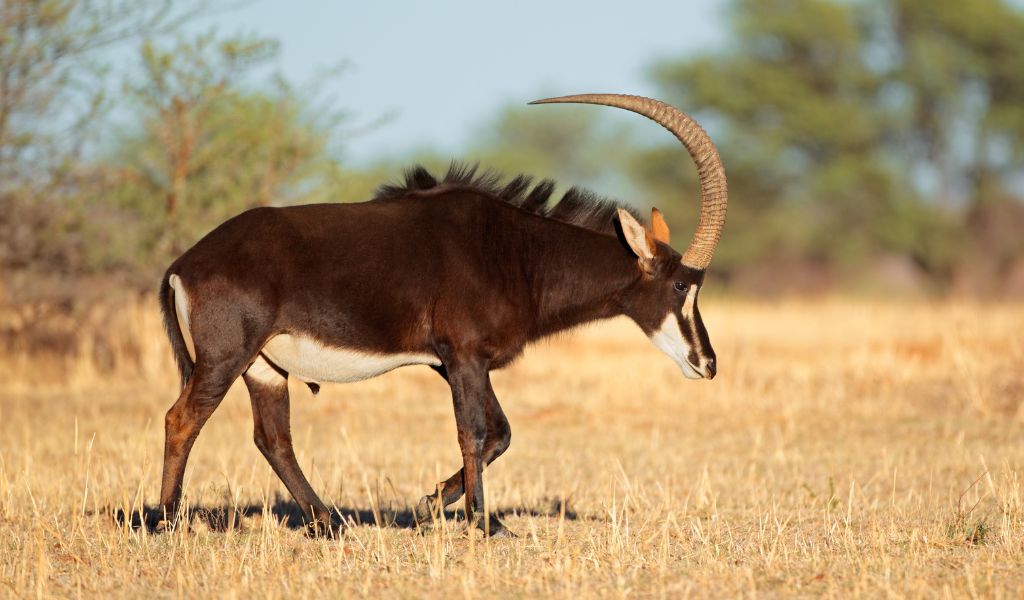
The sable antelope is often regarded as one of the most beautiful antelope in Africa. Mature bulls develop a dark chocolate to jet-black coat that contrasts dramatically with their white facial markings and belly.
Sable horns are longer and more dramatically curved than roan horns. Bulls often carry horns measuring 80 to 110 cm, sweeping backward in an elegant arc. The horn shape is one of the main reasons sable are so highly valued.
Adult sable bulls typically weigh between 200 and 270 kg, slightly lighter than roan but appearing taller and more refined.
Habitat Differences in Namibia
Roan Habitat
Roan antelope prefer:
- Open woodland savannah
- Grass-dominated plains
- Areas with tall grazing and access to water
They are grazers and rely heavily on quality grasslands. In Namibia, they are usually found on well-managed private ranches where grazing conditions are maintained.
Sable Habitat
Sable prefer:
- Bushveld and mixed woodland
- Areas with thicker vegetation than roan habitat
- Regions with permanent water sources
Sable are also grazers but tolerate slightly denser cover than roan. They are often found in smaller, controlled populations on private game ranches in Namibia.
Behavior and Temperament
Roan Behavior
Roan antelope are alert and can be defensive. Unlike many antelope species that immediately flee, roan may pause and observe a threat before deciding to move. In rare situations, they may even face danger rather than retreat instantly.
They live in herds led by a dominant bull, and multiple animals are often watching at once, which makes stalking challenging.
Sable Behavior
Sable antelope are confident and sometimes aggressive, especially mature bulls. They are known for standing their ground and using their long horns defensively if pressured.
Herds are structured similarly to roan herds, but sable bulls often maintain more defined territories. Their dark coats can make them easier to spot against lighter grasslands but harder to approach in wooded areas.
Hunting Difficulty
Both species require careful planning and ethical shot placement, but there are subtle differences in the hunting experience.
Roan Hunting
Roan hunts often involve:
- Long glassing sessions
- Strategic stalks across open grassland
- Careful wind management
Because roan inhabit more open terrain, hunters must rely on natural dips in the land and vegetation for cover.
Roan are tough animals with heavy muscle and bone, requiring solid shot placement and sufficient caliber.
Sable Hunting
Sable hunts typically involve:
- Spot-and-stalk in bushveld terrain
- Careful trophy selection within herds
- Close observation of horn length and symmetry
Because sable often stays closer to thicker cover, stalking can require slower, more patient approaches.
Sable are equally tough and require appropriate calibers and premium bullets.
Trophy Judgement Comparison
Roan Trophy Evaluation
A mature roan bull is judged by:
- Horn length and mass
- Thick, deeply ridged horn bases
- Horn sweep and symmetry
- Body maturity and neck thickness
Mass at the base is often more important than extreme horn length.
Sable Trophy Evaluation
A quality sable bull is judged by:
- Long, sweeping horn length
- Deep backward curvature
- Symmetry and horn tip alignment
- Dark body coloration indicating maturity
Horn length tends to be the primary factor in sable trophy evaluation.
Shot Placement and Equipment
Both species fall into Namibia’s large game category for bowhunting and require:
- Minimum 65 ft/lb kinetic energy
- Arrows weighing 450 grains or more
For rifle hunting, recommended calibers include:
- .30-06 Springfield
- .300 Winchester Magnum
- 7mm Remington Magnum
- .338 calibers for added confidence
Broadside shots placed one-third up the body behind the shoulder are ideal for both species.
Cost and Availability in Namibia
Both roan and sable are premium-priced plains game species due to limited availability and intensive wildlife management.
Generally:
- Sable are often more expensive due to high demand and visual appeal
- Roan are similarly premium but sometimes slightly more accessible depending on ranch availability
Pricing varies by outfitter and property management programs.
Which Should You Choose?
Choose Roan if You Want
- A larger-bodied, muscular antelope
- A bold facial mask and strong horn mass
- A hunt in open grassland terrain
- A slightly less common but equally impressive trophy
Choose Sable if You Want
- One of Africa’s most visually striking antelope
- Long, dramatic, sweeping horns
- A darker, high-contrast trophy mount
- A species widely regarded as one of Africa’s most elegant antelope
Book Your Namibian Hunting Safari At Otjandaue
Both roan and sable represent the upper tier of plains game hunting in Namibia. Each species offers size, strength, and prestige, and both require careful management to ensure sustainable populations.
If you prefer raw power, mass, and a bold presence, the roan may be the right choice. If you are drawn to dramatic horn length, dark coloration, and visual elegance, the sable may better match your goals.
Either way, a roan or sable hunt in Namibia is a serious and rewarding addition to any African safari.