
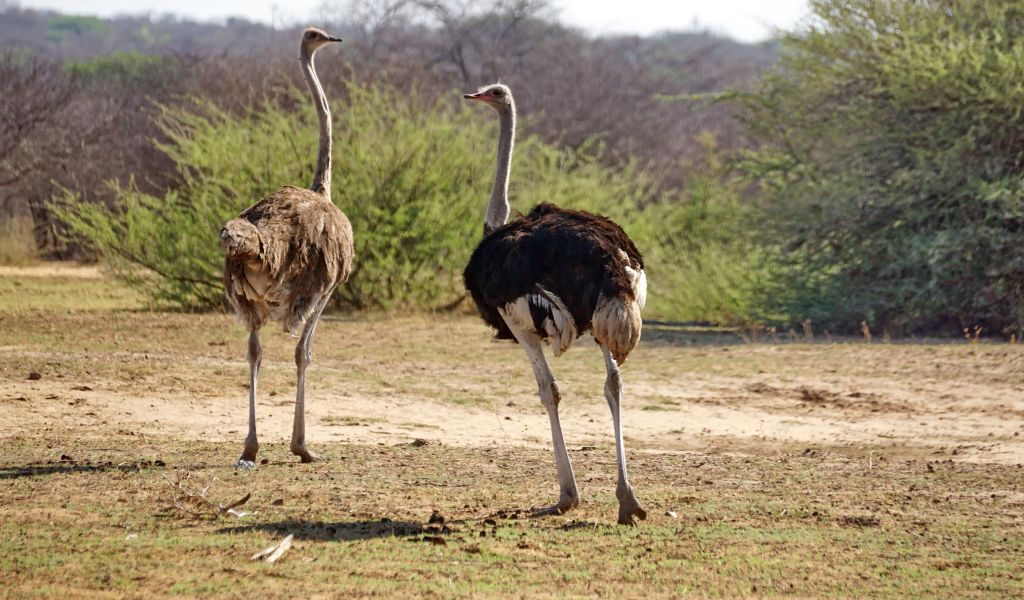
Ostrich hunting in Namibia offers a distinctive and often overlooked safari opportunity. The common ostrich (Struthio camelus) is the largest bird in the world and one of Africa’s most recognizable species. While many hunters focus on antelope or predators, adding an ostrich to your safari provides a unique challenge and a memorable trophy.
Namibia’s vast open landscapes, dry savannah, and semi-arid plains create ideal conditions for healthy ostrich populations. On well-managed private ranches, ostrich hunts are conducted ethically and sustainably as part of overall wildlife management programs.
About the Common Ostrich
The common ostrich is native to Africa and is well adapted to hot, dry climates. Adult males can reach heights of 2.1 to 2.8 meters and weigh between 100 and 145 kg. Females are slightly smaller.
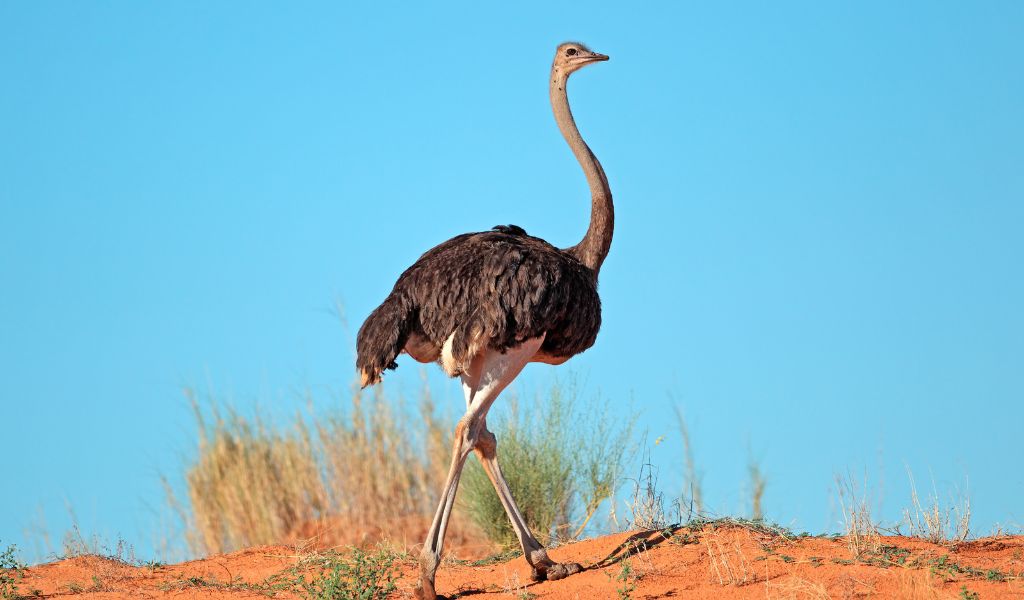
Males are easily identified by their striking black plumage with white wing and tail feathers, while females have brown and grey coloration that blends into the surrounding environment. Their long necks and powerful legs allow them to run at speeds of up to 70 km/h, making them one of the fastest animals on the African plains.
Habitat and Distribution in Namibia
In Namibia, ostriches are commonly found in:
- Open savannah and grasslands
- Semi-desert regions
- Farmland and private game ranches
- Open plains with clear visibility
They prefer wide, open terrain where their eyesight gives them an advantage against predators. Because they can spot danger from long distances, stalking an ostrich requires careful planning and use of terrain.
Behavior and Characteristics
Ostriches are highly alert and rely on vision as their primary defense. When threatened, they will typically run rather than hide. During the breeding season, males can become territorial and protective.
They feed primarily on seeds, grasses, shrubs, and occasionally insects. Their strong digestive system allows them to process tough plant material efficiently.
Because of their height and open habitat preference, ostriches are often visible from long distances. However, getting within shooting range can be more difficult than many hunters expect.
Hunting Methods
Spot and Stalk
The most common method for ostrich hunting in Namibia is spot and stalk. This involves:
- Locating birds at a distance
- Using terrain such as shallow depressions, brush, or slight rises for cover
- Approaching slowly with favorable wind conditions
Because ostriches are tall and alert, stalking requires patience and careful movement.
Opportunistic Hunting
Ostriches are sometimes hunted opportunistically while pursuing plains game in open terrain.
Shot Placement
Shot placement is critical when hunting ostriches due to their unique anatomy.
The ideal shot is placed at the base of the neck where it meets the body, targeting the vital organs. A broadside chest shot slightly above the legs is also effective.
Because the body is large but the vital zone is more compact than it appears, hunters should wait for a steady, broadside presentation. Head shots are generally avoided due to movement and low margin for error.
Recommended Caliber and Bow Setup
Rifle
Suitable calibers include:
- .243 Winchester
- .270 Winchester
- .30-06 Springfield
- Similar medium-caliber rifles
Premium expanding bullets are recommended to ensure ethical harvest.
Bow
Ostrich fall under Namibia’s medium game category for bowhunting.
Minimum requirements include:
- 40 ft/lb of kinetic energy
- 400-grain arrow or heavier
Shots should be taken at close range, ideally from a blind or well-planned stalk.
Trophy Value
Ostrich trophies are unique and versatile. Hunters can preserve:
- The full skin for a life-size mount
- The neck and head for a distinctive wall display
- Feathers for decorative or traditional use
Ostrich leather is also highly valued for its durability and unique pattern.
Best Time of Year to Hunt
The dry season from May to September offers the best visibility and easier stalking conditions. Shorter grass and less vegetation make movement more predictable.
Why Add Ostrich to Your Safari?
Ostrich hunting adds diversity to your safari experience. It provides:
- A unique trophy different from traditional antelope
- A challenging stalk in open terrain
- An affordable addition to a plains game package
- A memorable story and conversation piece
Because ostriches are abundant in many regions of Namibia, adding one to your hunt is often practical and convenient.
Book Your Namibian Hunting Safari At Otjandaue
Ostrich hunting in Namibia offers a rewarding and distinctive experience that complements any plains game safari. While they may not carry horns or tusks, their size, speed, and impressive presence on the open plains make them a worthy addition to your hunting adventure.
Whether taken as a primary objective or added opportunistically during your safari, the common ostrich represents another exciting chapter in the diverse and unforgettable hunting experiences Namibia has to offer.