
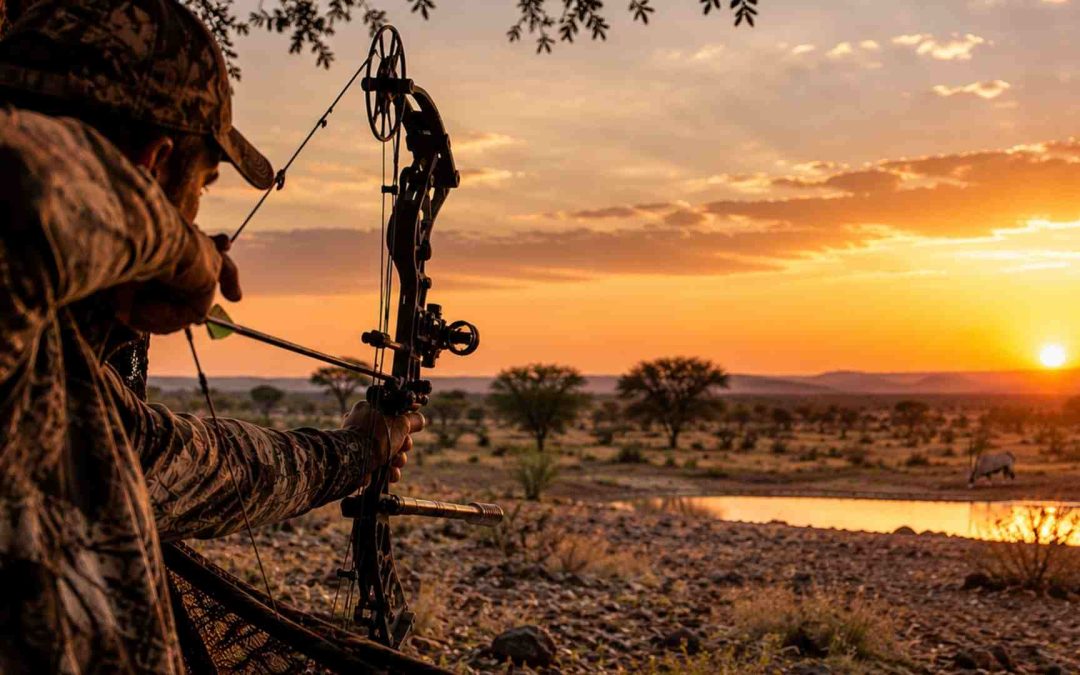
Bow hunting in Namibia offers one of the most exciting and rewarding ways to experience an African safari. With vast private hunting ranches, abundant plains game, and well-managed wildlife populations, Namibia has earned a reputation as one of the world’s premier bow hunting destinations.
Unlike rifle hunting, bow hunting demands patience, precision, and the ability to get within close range of your quarry. Every successful stalk or waterhole encounter is hard-earned, making each trophy even more memorable.
At Otjandaue Hunting Safaris, we welcome bow hunters from around the world and provide professionally designed blinds, experienced Professional Hunters, and exceptional game populations to maximize your chances of a successful and ethical hunt.
Why Choose Namibia for Bow Hunting?
Namibia has become one of Africa’s leading destinations for bow hunters for several reasons.
The country offers:
- Vast privately owned hunting concessions
- Healthy populations of plains game
- Long hunting seasons
- Dry climate with excellent visibility
- Professionally managed hunting operations
- Experienced Professional Hunters
- Comfortable hunting lodges
- Fair-chase hunting opportunities
Because most hunting takes place on privately managed land, wildlife populations are carefully monitored and managed, ensuring sustainable hunting and outstanding trophy quality.
Bow Hunting at Otjandaue Hunting Safaris
Otjandaue Hunting Safaris offers dedicated bow hunting opportunities across diverse Namibian landscapes.
Hunters can enjoy:
- Professionally constructed waterhole blinds
- Comfortable elevated and ground blinds
- Productive natural and artificial waterholes
- Experienced Professional Hunters familiar with bow hunting techniques
- Opportunities to hunt a wide variety of plains game during one safari
Whether you are planning your first African bow hunt or returning to pursue another dream trophy, our team works closely with every hunter to create a safe, enjoyable, and unforgettable experience.
Plains Game Species Available for Bow Hunting
Namibia offers excellent opportunities to hunt a wide variety of plains game with a bow.
Species commonly available at Otjandaue Hunting Safaris include:
- Oryx (Gemsbok)
- Kudu
- Eland
- Waterbuck
- Blue Wildebeest
- Black Wildebeest
- Red Hartebeest
- Burchell’s Zebra
- Hartmann’s Mountain Zebra
- Impala
- Blesbuck
- Springbok
- Warthog
- Steenbok
- Common Duiker
- Jackal
Each species presents its own unique challenge, requiring different stalking techniques, patience, and shot opportunities.
Bow Hunting Regulations in Namibia
Namibia has well-established regulations governing bow hunting to promote ethical hunting practices and humane harvesting of game animals.
The law specifies minimum kinetic energy requirements based on the size of the animal being hunted.
Small Game
- Minimum kinetic energy: 25 ft/lb
- Recommended arrow weight: 350 grains
Examples include:
- Jackal
- Caracal
- African Wildcat
- Steenbok
- Common Duiker
- Springbok
- Huntable game birds
Medium Game
- Minimum kinetic energy: 40 ft/lb
- Recommended arrow weight: 400 grains
Examples include:
- Impala
- Warthog
- Blesbuck
- Baboon
Large Plains Game
- Minimum kinetic energy: 65 ft/lb
- Recommended arrow weight: 450 grains
Examples include:
- Oryx (Gemsbok)
- Kudu
- Eland
- Waterbuck
- Blue Wildebeest
- Black Wildebeest
- Red Hartebeest
- Burchell’s Zebra
- Hartmann’s Mountain Zebra
Choosing equipment that meets or exceeds Namibia’s legal requirements is essential for ethical shot placement and reliable penetration.
Dangerous Game
Namibia does not permit the bow hunting of the following dangerous game species:
- Elephant
- Rhinoceros
- Hippopotamus
- Crocodile
- Lion
- Leopard
One notable exception is the cheetah, which may be hunted with a bow under very specific circumstances and only with the appropriate government-issued permits where legally available.
Hunters interested in predator hunting should consult their outfitter well in advance to discuss current regulations and permit availability.
Trophy Permit Regulations
International hunters should also be aware that Namibia’s standard trophy hunting permit allows a maximum of two animals of the same species per hunter per calendar year.
Should additional animals of the same species be required, they are generally taken under separate management or culling permits and are subject to different regulations.
Your Professional Hunter will ensure that all hunting activities comply with current Namibian legislation.
Choosing the Right Bow
Modern compound bows are by far the most popular choice for hunting in Namibia due to their speed, accuracy, and energy.
Most visiting hunters use bows with draw weights between:
- 60 and 70 pounds
Premium fixed-blade broadheads are widely recommended because they provide excellent penetration on larger plains game species.
Before traveling, hunters should ensure their bow is properly tuned and accurately sighted for the distances they expect to encounter.
Bringing Your Bow from the United States
Many international hunters prefer bringing their own bow to Namibia. Unlike firearms, transporting a bow is generally much simpler and does not require a firearm import permit.
Most airlines allow compound bows and traditional bows to be transported as checked sporting equipment, provided they are packed securely in a hard-sided bow case.
Before departure, always review your airline’s sporting equipment policies, as baggage allowances and fees vary between airlines.
It is also recommended to pack:
- Spare bow string
- Release aid
- Extra arrows
- Broadheads in a secure container
- Rangefinder
- Allen keys and tuning tools
- Spare D-loops and serving material
- Replacement screws and small accessories
These lightweight spare parts can quickly solve minor equipment issues that might otherwise interrupt your safari.
Traveling Through South Africa
Many flights from the United States to Namibia connect through O.R. Tambo International Airport in Johannesburg.
Although bows generally do not require import permits for Namibia, travelers transiting through South Africa may be required to declare their bow and comply with South African transit procedures, even when the bow remains checked through to Namibia.
Because airline procedures and transit regulations may change, it is advisable to confirm current requirements with your airline before departure and discuss your itinerary with your outfitter.
Hunting Methods
Waterhole Hunting
The majority of bow hunting in Namibia takes place from professionally constructed blinds overlooking productive waterholes.
During the dry season, game animals visit water regularly, creating excellent opportunities for close-range shots.
Most shot opportunities occur between 15 and 30 yards, although actual distances vary depending on the species, terrain, blind placement, and individual hunting situation.
Patience is essential, as animals often approach cautiously before presenting an ethical shot.
Spot and Stalk
Spot-and-stalk bow hunting is less common but can be extremely rewarding for experienced hunters.
This method requires:
- Careful wind management
- Slow, deliberate movement
- Excellent use of natural cover
- Patience and discipline
Spot-and-stalk hunting is physically demanding but offers an unforgettable fair-chase experience.
Best Time of Year for Bow Hunting
The dry season from May through September is generally considered the best time for bow hunting in Namibia.
During these months:
- Water sources become more limited
- Animals visit waterholes more consistently
- Vegetation becomes less dense
- Cooler temperatures improve hunting conditions
These factors significantly increase the likelihood of close-range opportunities.
Shot Placement
Accurate shot placement is the single most important factor in successful bow hunting.
For most plains game species, the ideal shot is:
- Broadside
- Slightly quartering away
- Just behind the shoulder
This allows the arrow to pass through the heart and lungs for a quick, humane harvest.
Hunters should avoid low-percentage shot angles and wait patiently for the correct opportunity.
Preparing for Your Safari
Preparation plays a major role in a successful African bow hunt.
Before traveling to Namibia, hunters should:
- Practice shooting from seated positions
- Practice at realistic hunting distances
- Tune their equipment before departure
- Bring spare strings and accessories
- Confirm equipment suitability with their outfitter
Many shots are taken from inside hunting blinds, making seated practice particularly valuable.
Ethical Bow Hunting
Bow hunting requires hunters to get significantly closer to game than rifle hunting, making patience, discipline, and responsible decision-making essential.
At Otjandaue Hunting Safaris, every effort is made to ensure ethical hunting practices by:
- Encouraging hunters to wait for high-percentage shot opportunities
- Using equipment that meets or exceeds Namibia’s legal requirements
- Providing experienced Professional Hunters who assist with shot placement and animal recovery
- Promoting fair-chase hunting throughout every safari
Responsible bow hunting helps ensure clean, humane harvests while maintaining the high standards for which Namibia’s hunting industry is internationally respected.
Why Bow Hunters Love Namibia
Few destinations offer the combination of abundant game, beautiful landscapes, experienced Professional Hunters, and well-managed hunting properties found in Namibia.
Bow hunters appreciate:
- Close encounters with African wildlife
- Challenging yet rewarding hunting opportunities
- Excellent trophy quality
- Comfortable hunting lodges
- Fair-chase hunting experiences
For many hunters, harvesting a mature kudu, oryx, or eland with a bow represents the pinnacle of an African hunting safari.
Book Your Bow Hunting Safari At Otjandaue Hunting Safaris
Namibia has earned its reputation as one of the world’s finest bow hunting destinations. With diverse plains game species, experienced Professional Hunters, well-designed waterhole blinds, and carefully managed hunting areas, it offers an unforgettable experience for hunters of all skill levels.
At Otjandaue Hunting Safaris, we are committed to providing ethical, fair-chase bow hunting experiences while helping every guest enjoy a safe, successful, and memorable safari.
Disclaimer: Hunting regulations, bow hunting requirements, airline policies, and wildlife legislation may change over time. Hunters should always confirm the latest regulations with their outfitter, airline, and the Namibian Ministry of Environment, Forestry and Tourism (MEFT) before traveling.