
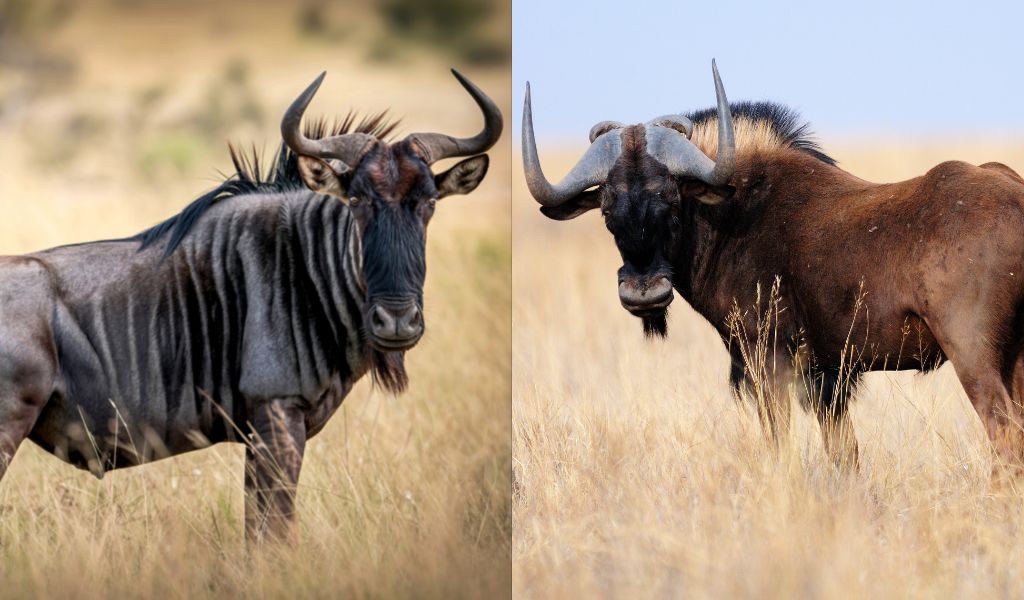
Namibia offers excellent opportunities to hunt both blue wildebeest and black wildebeest, two of Africa’s most recognizable and resilient plains game species. While they share a similar name and reputation for toughness, these animals differ significantly in appearance, behavior, habitat, and hunting experience.
If you are planning your Namibian safari and deciding between the two, understanding these differences will help you choose the right hunt for your goals.
Species Overview
Blue Wildebeest (Connochaetes taurinus)
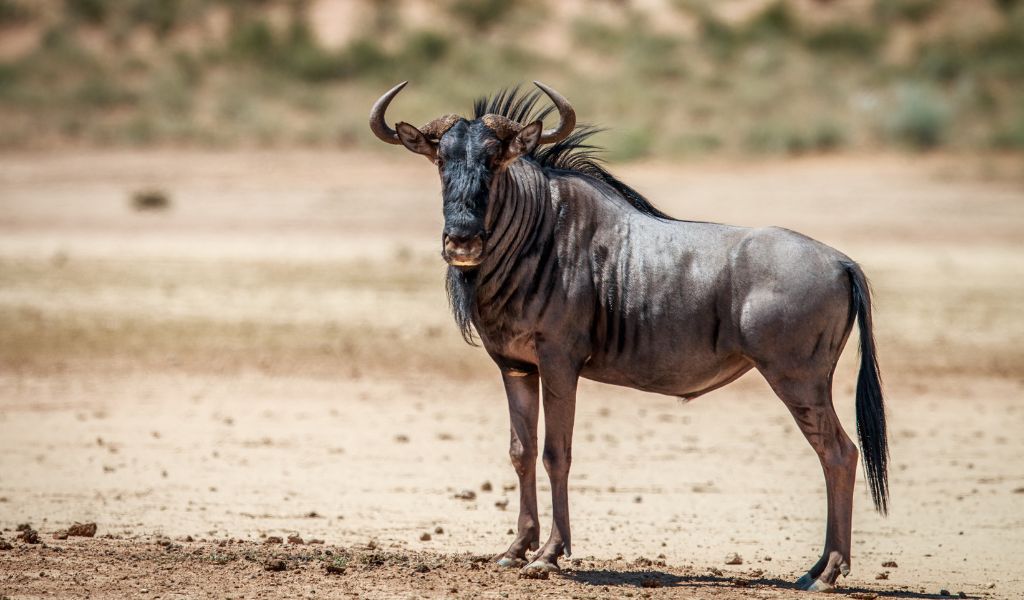
The blue wildebeest, often called the brindled wildebeest, is the more common of the two species and is found throughout Namibia. It is a large, muscular antelope with a heavy build and a distinctive sloping back.
Key characteristics:
- Weight: 180 to 270 kg
- Shoulder height: around 1.4 meters
- Grey to bluish coat with dark vertical stripes
- Large curved horns that sweep outward and then upward
Black Wildebeest (Connochaetes gnou)
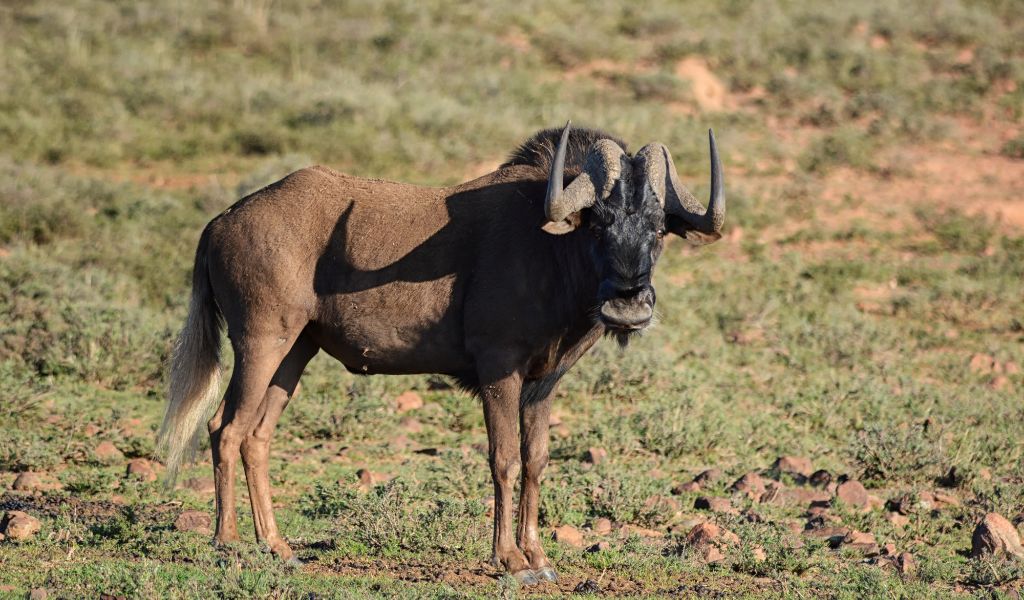
The black wildebeest, also known as the white-tailed gnu, is smaller and more compact. It is easily recognized by its white tail and unique forward-curving horns.
Key characteristics:
- Weight: 110 to 180 kg
- Shoulder height: around 1.2 meters
- Dark brown to black coat
- Distinct white tail and upright mane
- Horns curve forward and upward
Habitat Differences in Namibia
Blue Wildebeest Habitat
Blue wildebeest prefer:
- Open savannah and bushveld
- Areas with access to water
- Mixed terrain with grass and light cover
They are widely distributed on private ranches and are commonly included in plains game safaris.
Black Wildebeest Habitat
Black wildebeest prefer:
- Open plains and grasslands
- Flat terrain with wide visibility
- Cooler, less densely vegetated areas
They are often found in more open environments and are sometimes managed in smaller groups.
Behavior and Hunting Experience
Blue Wildebeest
Blue wildebeest are known for their strength and endurance. They are often referred to as one of the toughest plains game animals due to their ability to absorb poorly placed shots and travel long distances.
Hunting characteristics:
- Often found in herds
- Alert and cautious but less erratic than black wildebeest
- Typically hunted using spot-and-stalk methods
- May require follow-up shots if placement is not perfect
Black Wildebeest
Black wildebeest are unpredictable and known for their energetic and sometimes erratic behavior. They are famous for their sudden bursts of speed and circling movements.
Hunting characteristics:
- Smaller herds or territorial groups
- Extremely alert and reactive
- Often run in unpredictable patterns
- More challenging to approach due to open terrain
Hunting Difficulty
Both species are considered challenging, but for different reasons.
- Blue wildebeest present a physical challenge due to their size, toughness, and stamina
- Black wildebeest present a behavioral challenge due to their alertness and unpredictable movement
If you are looking for a tougher animal to take down, blue wildebeest are often considered more demanding in terms of shot placement and penetration.
If you are looking for a more dynamic and fast-paced hunt, black wildebeest provide a unique challenge.
Trophy Characteristics
Blue Wildebeest Trophy
- Larger, heavier horns
- Wide bases with a sweeping curve
- Thick skull and boss
- Classic “buffalo-like” appearance
Black Wildebeest Trophy
- Distinct forward-curving horns
- More compact and symmetrical shape
- Unique profile compared to other antelope
- White tail adds visual contrast to the mount
Shot Placement and Equipment
Both species require careful shot placement due to their strong bone structure and muscular build.
Ideal shot placement:
- Broadside, just behind the shoulder
- One-third up the body to reach the heart and lungs
Recommended calibers:
- .270 Winchester
- .30-06 Springfield
- .300 Winchester Magnum
Premium bullets are strongly recommended.
For bowhunting, both species fall into Namibia’s large game category, requiring:
- Minimum 65 ft/lb kinetic energy
- 450-grain arrow or heavier
Best Time to Hunt
The best time to hunt both species in Namibia is during the dry season from May to September.
During this period:
- Vegetation is thinner
- Animals are easier to spot
- Movement becomes more predictable
Early mornings and late afternoons provide the best opportunities.
Which Should You Choose?
Choose Blue Wildebeest if you want
- A larger, more powerful animal
- A classic African plains game trophy
- A physically demanding hunt
- A species known for toughness and endurance
Choose Black Wildebeest if you want
- A more unpredictable and fast-paced hunt
- A unique trophy with distinctive horns
- A challenge in open terrain
- A slightly smaller but highly characterful animal
Book Your Wildebeest Hunting Safari At Otjandaue Hunting Safaris Namibia
Both blue wildebeest and black wildebeest offer excellent hunting opportunities in Namibia, each with its own appeal. The blue wildebeest stands out for its size and toughness, while the black wildebeest offers a more unpredictable and visually unique experience.
Many hunters choose to pursue both species during the same safari, as they complement each other well and provide a complete wildebeest hunting experience.
At Otjandaue Hunting Safaris, both species can be hunted in ethical, well-managed conditions with experienced professional hunters guiding you every step of the way.