
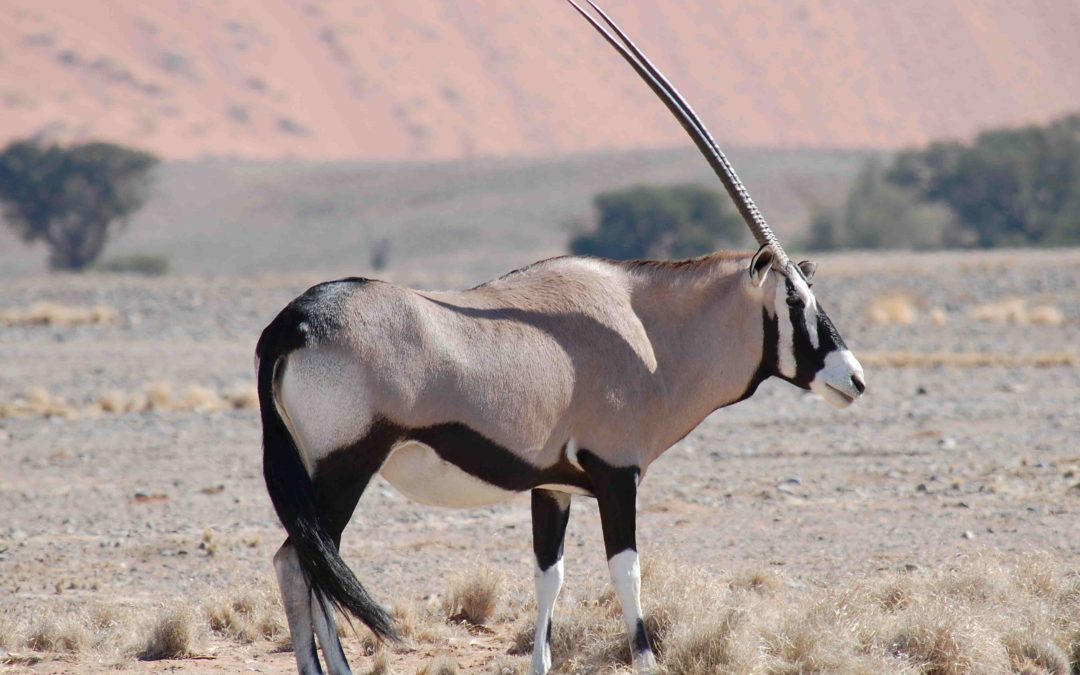
Few animals are as closely associated with Namibia as the magnificent oryx, also known as the gemsbok. Featured on Namibia’s national coat of arms and found across much of the country’s arid landscapes, the oryx has become a symbol of resilience, beauty, and survival in one of the world’s harshest environments.
For hunters and wildlife enthusiasts alike, the oryx represents the essence of Namibia. Its striking appearance, impressive horns, and ability to thrive in challenging conditions make it one of the most admired antelope species in Africa.
Oryx Size and Physical Measurements
The oryx is one of Africa’s larger antelope species and possesses a powerful, athletic build.
Typical measurements include:
- Shoulder Height: 1.15 to 1.25 meters (45 to 49 inches)
- Body Length: 1.8 to 2.4 meters (6 to 8 feet)
Weight:
- Bulls: 180 to 240 kg (400 to 530 lbs)
- Cows: 150 to 210 kg (330 to 460 lbs)
Horn Length:
- Average: 75 to 90 cm (30 to 35 inches)
- Exceptional trophies often exceed 100 cm (39 inches)
Although both sexes carry horns, mature bulls generally have thicker, heavier bases, while cows often carry slightly longer and more slender horns.
Distinctive Characteristics
The oryx is one of the easiest African antelope to identify thanks to its unique appearance.
Key characteristics include:
- Long, straight spear-like horns
- Bold black-and-white facial markings
- Grey-tan coat adapted to arid environments
- Black stripe running along the lower flank
- Black markings on the legs
- Strong shoulders and deep chest
- Thick neck and muscular body
Their coloration provides excellent camouflage against Namibia’s dry landscapes while their horns serve as an effective defense against predators.
Male vs Female Oryx
One of the most interesting aspects of the species is that both males and females carry impressive horns.
Male Oryx (Bull)
Bulls are generally:
- Heavier and more muscular
- Thicker through the neck and shoulders
- Equipped with shorter but heavier horns
- More territorial during breeding periods
- Easily recognized by their thicker horn bases
Female Oryx (Cow)
Cows are generally:
- Slightly smaller and lighter
- More slender in build
- Often possess longer, thinner horns
- Usually found with calves and family groups
- Less bulky through the shoulders and neck
From a distance, horn thickness is often the easiest way to distinguish a mature bull from a cow.
Habitat and Distribution
The oryx is perfectly adapted to Namibia’s harsh conditions and can be found throughout much of the country.
Preferred habitats include:
- Open savannah
- Semi-desert plains
- Dry bushveld
- Rocky hills and mountain foothills
- Dry river systems
- Arid and semi-arid regions
Unlike many antelope species, oryx can survive in areas with very little surface water, making them one of Namibia’s most successful large mammals.
Remarkable Desert Adaptations
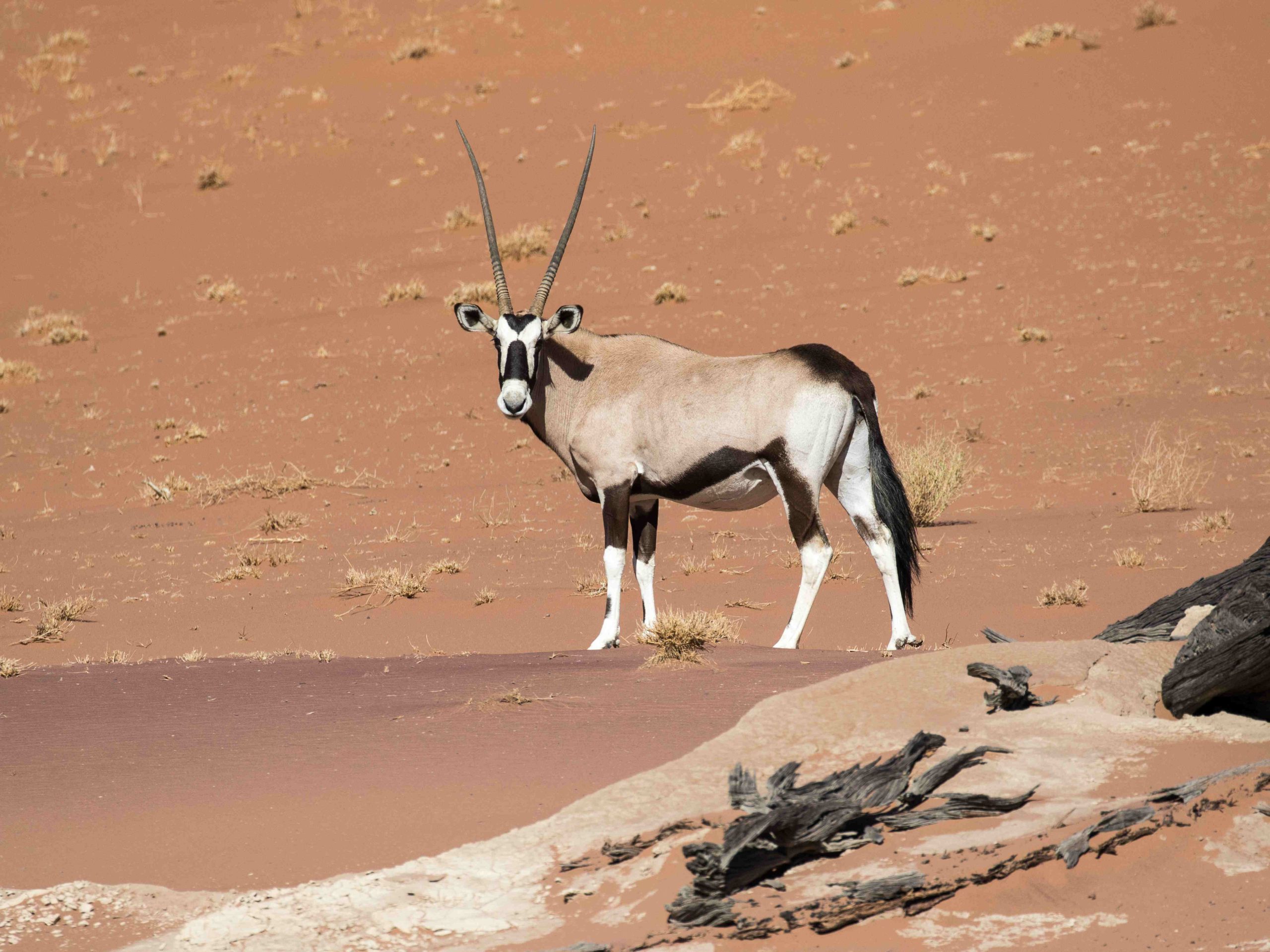
Oryx possess several unique adaptations that allow them to survive in extreme conditions.
These include:
- Ability to raise body temperature during the hottest periods of the day
- Reduced need for drinking water
- Ability to extract moisture from plants
- Efficient regulation of body heat
- Light-colored coat that reflects sunlight
These adaptations allow oryx to thrive in regions where many other large animals struggle to survive.
Behavior and Social Structure
Oryx are social animals and are commonly found in small groups or family herds.
Typical herd structure includes:
- Adult cows
- Juveniles
- Sub-adult animals
- One dominant bull
Bachelor groups of young bulls are also common, while older mature bulls may occasionally become solitary.
Although they appear calm and relaxed, oryx are highly alert and constantly aware of their surroundings.
Daily Activity Patterns
Oryx are most active during:
- Early morning
- Late afternoon
- Evening
During the hottest part of the day, they often seek shade beneath trees or rest in open areas where they can detect approaching danger.
Feeding Habits
Oryx are both grazers and browsers, allowing them to adapt to changing environmental conditions.
Their diet consists of:
- Grasses
- Leaves
- Shrubs
- Wild melons
- Succulents
- Seasonal vegetation
This flexibility is one reason they thrive across such a wide range of habitats.
Natural Defenses
Despite being prey animals, oryx are well equipped to defend themselves.
Their primary defenses include:
- Exceptional eyesight
- Strong herd awareness
- Powerful legs
- Sharp horns
- Ability to run at speeds exceeding 60 km/h (37 mph)
When threatened, an oryx may face a predator rather than immediately flee. Their long horns can be extremely effective defensive weapons against lions, leopards, and hyenas.
Why Oryx Are So Popular Among Hunters
Few African antelope combine beauty, size, toughness, and adaptability like the oryx.
Hunters are drawn to the species because of:
- Their iconic appearance
- Impressive horn length
- Challenging hunting conditions
- Stunning shoulder and pedestal mounts
- Their status as one of Namibia’s signature animals
For many visitors, harvesting an oryx represents a true Namibian hunting experience.
An Icon of Namibia
Whether seen crossing an open plain, standing beneath an acacia tree, or silhouetted against a Namibian sunset, the oryx embodies the spirit of the African wilderness.
Its remarkable adaptations, striking appearance, and ability to thrive in some of the harshest environments on earth have earned it a special place in Namibia’s wildlife heritage. For hunters and wildlife enthusiasts alike, the oryx remains one of the country’s most iconic and respected animals.