

Namibia is widely regarded as one of the premier destinations for hunting in Africa. Its vast and varied landscapes provide hunters with a wide range of species to pursue, from the arid plains to lush riverine areas. One species that is often overlooked but presents a unique and rewarding challenge is the tsessebe. This swift and elusive antelope is one of the fastest in Africa, making it an exciting and sought-after quarry for hunters looking for a thrilling safari experience.
Overview of Tsessebe
The tsessebe (Damaliscus lunatus lunatus) is a subspecies of the topi and is found in certain parts of Namibia, particularly in the northern and northeastern regions. While not as widely distributed as some other species, tsessebe are found in areas where grasslands, floodplains, and savannas meet, often near water sources.
Key Characteristics of Tsessebe:
- Size: Tsessebe are medium-sized antelope, with males weighing between 130-140 kg (286-308 lbs) and females slightly lighter at 110-120 kg (242-264 lbs). They stand around 1 meter (3.3 feet) tall at the shoulder.
- Appearance: They have a sleek, dark brown or purplish-brown coat that can appear glossy in sunlight. Their faces are dark with distinctive facial markings, and they have lighter underbellies.
- Horns: Both males and females have horns, though males’ horns are typically thicker and longer, measuring around 40 cm (16 inches). The horns curve outward and upward, making them a distinguishing feature of the species.
- Speed: One of the most notable characteristics of the tsessebe is its speed. It is considered one of the fastest antelopes in Africa, capable of running up to 80 km/h (50 mph) when threatened.
Tsessebe Habitat in Namibia
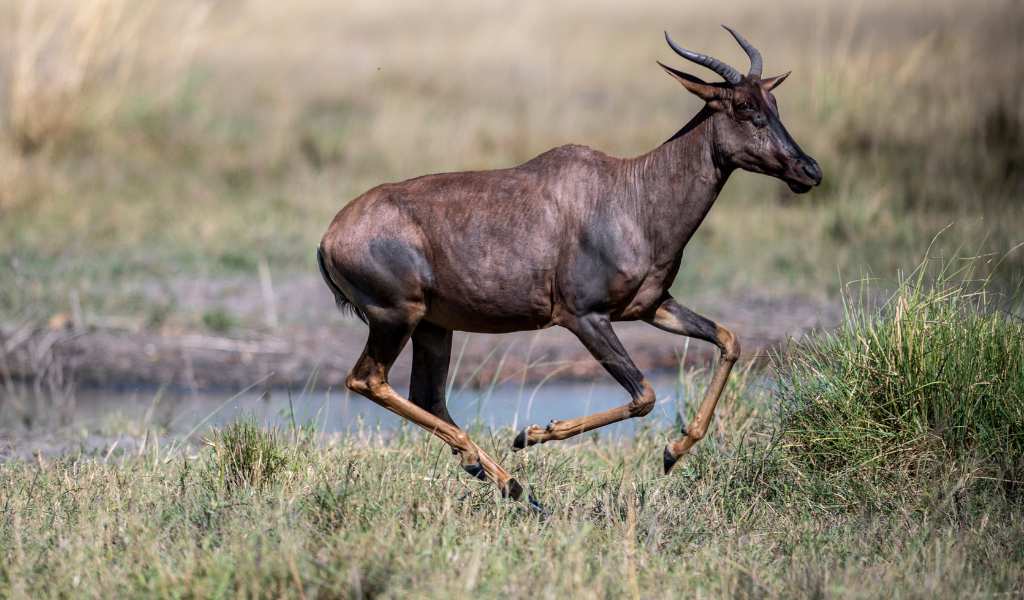
In Namibia, tsessebe are typically found in the northeastern regions, such as the Caprivi Strip and the areas near the Okavango River. These regions provide the ideal habitat for tsessebe due to the availability of water and grasslands. Tsessebe prefer floodplains, open grasslands, and savannas, especially near water sources. They are often found grazing in these areas, which provide them with the necessary cover and resources to thrive.
Tsessebe are highly water-dependent, meaning they are usually not found far from rivers, lakes, or other water bodies. This water reliance also makes them highly susceptible to the seasonal changes in their environment. During the dry season, tsessebe will concentrate around water sources, which can make hunting them easier if you know their patterns of movement.
Best Methods for Hunting Tsessebe in Namibia
1. Spot and Stalk
Walk and Stalk Method: The most common way to hunt tsessebe is through the walk-and-stalk method. Given their preference for open plains and floodplains, hunters often begin by spotting tsessebe from a distance using binoculars or spotting scopes. Due to the tsessebe’s keen sense of sight and speed, patience is essential. Once located, hunters must approach carefully, using available cover such as trees, grass, or hills to get within shooting range.
Challenges of Spot and Stalk: The tsessebe is incredibly alert and quick to flee when it detects any movement or danger. Their speed allows them to escape predators, which means hunters must be strategic in their approach. Stalking tsessebe requires a combination of stealth, patience, and quick reflexes to make a clean shot when the opportunity arises.
2. Blind Hunting
In regions where water sources are limited, blind hunting near waterholes can be an effective strategy for hunting tsessebe, especially during the dry season. Since tsessebe rely on water, they frequently visit waterholes to drink, providing hunters with an opportunity to observe and select a suitable trophy.
Using a Blind: Setting up a blind near a known water source can increase your chances of encountering tsessebe. This method requires patience and a good understanding of the tsessebe’s movements and behavior. While waiting in a blind, you may also encounter other species, offering additional opportunities for trophy hunting.
Trophy Evaluation and Processing
When it comes to trophy evaluation, the primary focus for tsessebe is on the horns. A mature bull’s horns are typically around 40 cm (16 inches) in length and will have a wide, outward curve. The thickness and overall condition of the horns are also considered when determining the quality of the trophy. Older bulls will often have thicker, more impressive horns, making them ideal trophies for hunters.
After a successful hunt, your professional hunter will assist in the proper field dressing and processing of the trophy. Namibia has several professional taxidermists who can assist with preserving your tsessebe trophy, ensuring that it remains a lasting memory of your hunting adventure.
Book your Namibian Hunting Safari at Otjandaue Hunting Safaris
In Namibia, hunting is not just about the thrill of the chase; it’s about connecting with the land, experiencing the diverse ecosystems, and contributing to the conservation of Namibia’s incredible wildlife. With the guidance of experienced professional hunters and the beauty of Namibia’s landscapes, hunting tsessebe is an adventure you won’t soon forget.
We want your trophy hunting safari to be a memorable experience. We’ll make you comfortable in our lodge that’s built on the banks of the Otjandaue river bed. The ranch is situated 20 km northeast of Omaruru and is about 2 and a half hours drive from the international airport in Windhoek, Namibia. We offer exclusive trophy hunting for you, or you and your group alone. Our ranch will be your private hunting retreat, with no other hunting parties while you are here.